
It’s natural to have questions about scarring when considering breast lift. While mastopexy is a transformative procedure, it does involve incisions, and the resulting scars are a normal part of the healing process. The good news is that a skilled surgeon places these incisions strategically, and with proper care, they can fade significantly over time. This guide provides a realistic look at the types of scars you can expect, the healing journey, and the most effective ways to minimize their appearance for the best possible outcome.
What Are the Different Breast Lift Scars
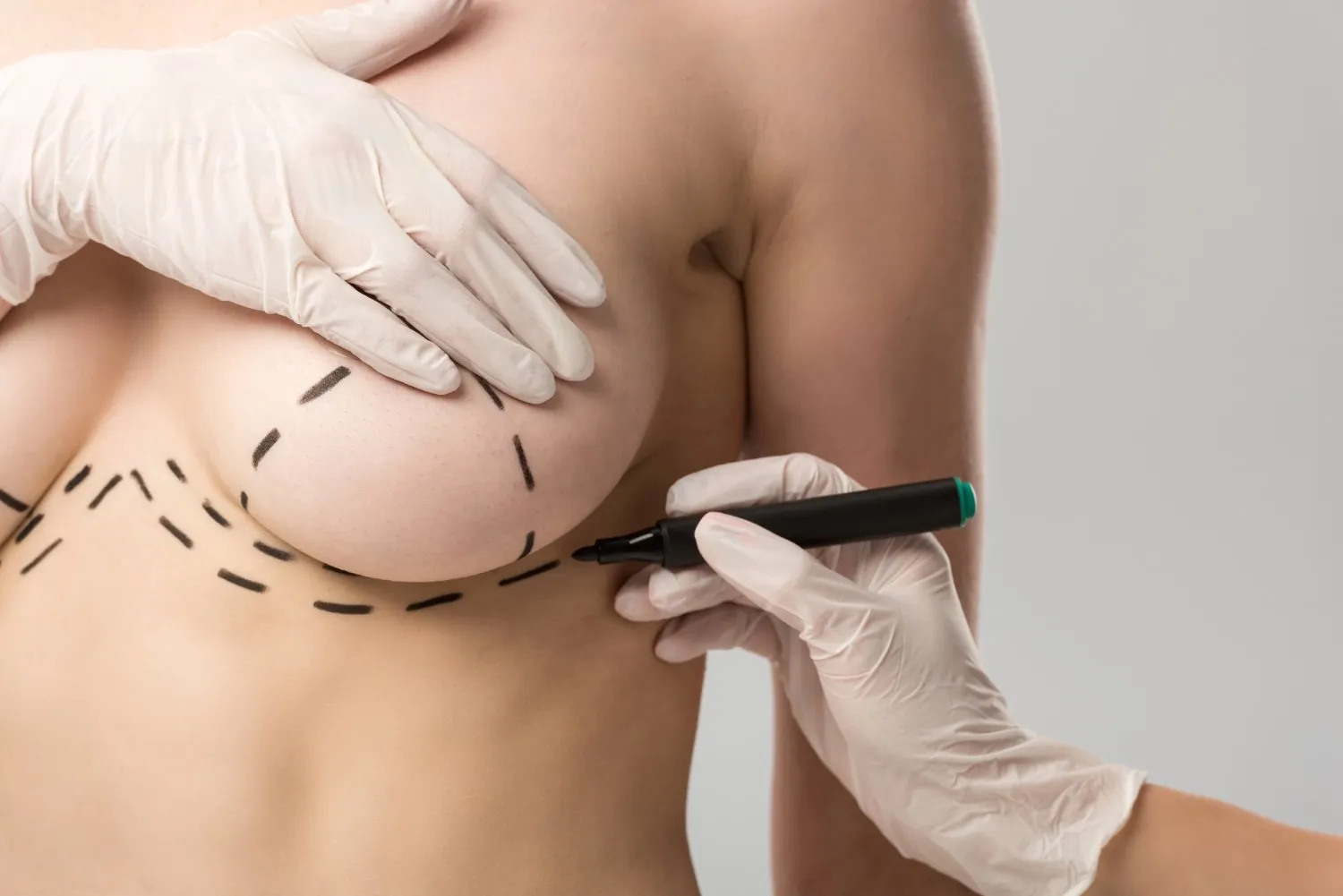
There are 4 different types of breast lift scars, the scar you will have is directly determined by the surgical technique used for your surgery. Your surgeon will choose a specific technique based on your anatomy and degree of sagging, which directly determines the scar pattern.
The Anchor Scar
This technique results in the most extensive scarring, forming a distinctive “anchor” shape. The scar traces the areola, runs vertically down to the breast crease, and follows the curve beneath your breast. While it is the most noticeable pattern, it is the necessary trade-off for correcting significant sagging, and surgeons strategically place the horizontal component to be hidden within the natural inframammary fold.
The Lollipop Scar
The lollipop scar is a more limited pattern, consisting of a circular scar around the areola with a single vertical line extending down to the breast crease. This avoids the horizontal scar under the breast, making it a popular choice for moderate lifting. The vertical scar often softens and becomes less noticeable over time than the anchor pattern.
The Donut Scar
This technique results in the most minimal scarring for a true lift procedure, with a single circular incision confined solely to the perimeter of the areola. The scar is designed to blend into the natural color transition between the areola and the surrounding skin. It’s a discreet option but is primarily suitable for those with very minimal sagging who need mainly nipple repositioning.
The Crescent Scar
This technique creates the absolute least noticeable scar of all breast lift options. The incision is a simple crescent shape along only the upper half of the areola’s border. This minimal approach provides a very subtle lift of the nipple position but offers no significant skin tightening or reshaping of the breast mound. It’s typically reserved for patients with extremely mild sagging and is often combined with breast augmentation.
Breast Lift Scars Healing Process
Your scar healing will happen in distinct phases, the foundation for good scar healing is laid during the initial weeks of your recovery process. Understanding the timeline can help you set realistic expectations of your breast lift surgery.
Inflammatory Phase (Weeks 1-2): The body immediately begins repairing the incision, which may appear red, slightly swollen, and feel tender.
Proliferative Phase (Weeks 3-6): Collagen production ramps up. Scars may look pink, purple, or red and can feel firm or raised. This is a normal part of the process.
Maturation Phase (3 Months to 2 Years): This is the long phase where scars remodel and soften. They will gradually flatten, become paler (often fading to white or a color closer to
Which Factors Affect Your Scars Formation?
Individual and genetic factors
Genetics: Your genetics influence how your skin scars. Some people naturally tend to develop more prominent scars, such as hypertrophic or keloid scars.
Age: Younger patients often produce more collagen, which can lead to thicker scars. Older patients generally make less collagen, so their scars may appear finer and less noticeable.
Skin type: Very fair or very dark skin tones can make scars more visible, simply because of the contrast with the surrounding skin.
Physiology: Everyone’s healing response is different. The way your body produces and organises collagen at the incision site plays a key role in how your scars mature over time.
Surgical and post-operative factors
Surgeon technique: Scar quality is strongly influenced by the surgeon’s skill, how the incisions are planned, and where they are placed. Cuts positioned in low-tension areas usually heal flatter and more smoothly. The degree of breast droop also affects which incision pattern is required.
Post-operative care: Your results depend heavily on how well you follow your aftercare instructions and how carefully you manage any potential breast lift surgery complications. This includes keeping incisions clean and dry, using any recommended scar therapies (such as silicone gels or sheets), and protecting the area from the sun.
Infection: If an incision becomes infected, the inflammatory response can be exaggerated, increasing the risk of thicker or more irregular scars.
Healing complications: Anything that slows or disrupts healing, such as prolonged swelling, fluid build-up, or infection, can lead to scars that are more visible.
Lifestyle factors
Smoking: Smoking reduces blood flow to the skin, limits oxygen delivery, and impairs healing, all of which can worsen scarring.
Sun exposure: UV exposure can darken scars, prolong redness, and make them stand out more against the surrounding skin.
Nutrition: Good wound healing depends on a balanced diet, including enough protein, vitamins, and minerals to support tissue repair.
Activity: Heavy lifting and strenuous exercise too soon after surgery can put tension on the incision lines, which may stretch scars and affect how they look long term.
Pregnancy and Breastfeeding
Future pregnancy and breastfeeding can change the shape and volume of your breasts again, which may also affect how your scars look over time. If you’re hoping to breastfeed after having a breast lift, it’s important to discuss this with your surgeon in advance and understand how timing your surgery before pregnancy could influence both your results and your ability to nurse.
8 Tips to Minimize Your Breast Lift Scars
Follow Your Surgeon’s Post-Operative Care Instructions
This is your number one priority. Proper aftercare, such as taking your medications on time and keeping your incisions clean, significantly impacts how well your scars heal and how they will look in the long term.
Scar Massage
After your surgeon gives the okay (usually around 4-6 weeks), gently massaging the scars with a moisturizer can help break down dense collagen fibers and prevent adherence.
Silicone Scar Sheets or Gels
This is the gold-standard topical treatment. Silicone creates a protective barrier, hydrates the scar, and has been clinically proven to improve the appearance of raised and red scars.
Skin Hydration
Keep the area and the surrounding skin well-moisturized with a gentle, fragrance-free lotion to maintain skin elasticity.
Protect From Sun Exposure
For at least a year, keep scars covered or use a high-SPF (50+) sunscreen. UV rays can permanently darken scars.
Laser Therapy
For persistent red or dark scars, vascular or fractional lasers can be highly effective in improving color and texture.
Steroid Injections
If a scar becomes raised, thick, or itchy, your surgeon may recommend corticosteroid injections to flatten it.
Maintain a Healthy Lifestyle
A balanced diet rich in protein and vitamins C and E, along with staying hydrated, provides your body with the essential building blocks for optimal healing.
If you want to avoid surgical scars altogether, you may prefer to explore non-surgical breast lifting treatments, which focus on skin tightening and mild lifting without incisions. These options won’t match surgical results but can be suitable for women with very mild sagging.
When Should You Call Your Surgeon?
While some redness and firmness are normal, you must contact your surgeon immediately if you notice any of the following:
Signs of Infection: Increasing redness, warmth, swelling, pus, or a foul odor from the incision.
Signs of a Hematoma: A sudden, painful, swollen, and often bruised area, indicating a collection of blood.
Worsening or Persistent Pain: Pain that intensifies instead of improving.
Delayed Healing: Incisions that are not closing or are reopening.
Abnormal Scarring: Scars that become excessively raised, thick, red, and extend beyond the original incision line (keloid).
Frequently Asked Questions (FAQs)
For the vast majority of patients, yes. The trade off of a flatter, more youthful breast contour for well-placed, manageable scars is one most find incredibly empowering.
The least noticeable breast lift scar is usually the crescent or periareolar (donut) scar, as both follow the natural edge of the areola. Crescent technique however is very limited and only suitable for a small lift, while periareolar scars are used more often but involve an incision all the way around the areola.
Yes, initially. Breasts will be high, swollen, and the scars will be prominent. This is temporary. They will gradually soften, drop to a more natural position, and scars will fade over the following months.
Yes. A skilled surgeon places scars in natural creases and transitions (like the areola border) to make them as inconspicuous as possible. They are also easily concealed by bras, bikini tops, and clothing.
You can’t speed up biological healing, but you can optimize it. Using silicone sheets, protecting scars from the sun, avoiding nicotine, and eating a nutrient-rich diet will give you the best and fastest possible result.
Conclusion
Breast lift scars are a reality of the procedure, but they are not the end of the story. With modern surgical techniques and a dedicated aftercare plan, they can heal to become fine, faint lines that are a small price for the confidence of a rejuvenated silhouette.
If you’re considering a breast lift and want to discuss scar placement and care with an expert, book a free consultation with our specialist team at Auralia to review your options and plan your procedure safely.