

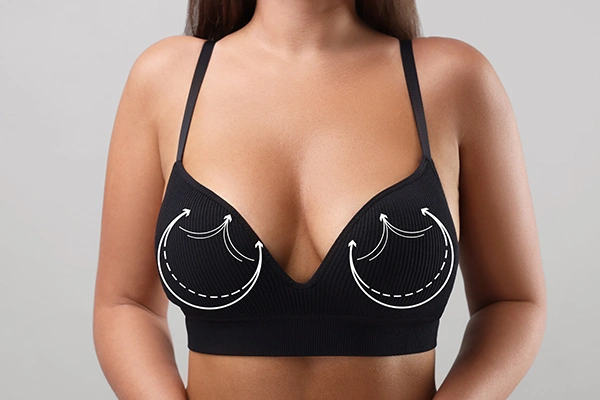
Women’s breasts often change over time due to pregnancy, weight shifts, ageing, or genetics. This can lead to sagging, loss of shape, or breasts that feel too heavy and uncomfortable. In many cases, surgery is the only way to correct these issues long term.
The two main options are a breast lift and a breast reduction. A breast lift focuses on raising and reshaping the breast, while a breast reduction focuses on making the breast smaller and lighter. This guide compares both procedures, including benefits, scars, recovery, and who they suit best, so you can see which one matches your needs.
What Is the Difference Between Breast Lift and Breast Reduction?
While breast lift and breast reduction surgeries both aim to improve how your breasts look, they do it in different ways. A breast reduction focuses on making the breasts smaller and lighter, while a breast lift focuses on lifting and reshaping what you already have.
Here’s a quick comparison table:
| Aspect | Breast Lift | Breast Reduction |
| Ideal Candidates | Women bothered by drooping or deflated-looking breasts but generally happy with their current cup size. | Women with very large, heavy breasts that cause physical discomfort or affect daily life. |
| Main Goal | To raise and reshape the breasts, restoring a firmer, more youthful position. | To make the breasts smaller and lighter while improving shape and proportion. |
| Key Issues Addressed | Sagging, loss of upper fullness, stretched skin, and low nipple position. | Back, neck and shoulder pain, bra strap grooving, skin irritation, and posture problems. |
| Procedure | Removes excess skin, tightens the breast envelope and repositions the nipple–areola complex. | Removes breast tissue, fat and skin, reshapes the breast, and often lifts the nipple higher. |
| Change in Breast Size | Volume is largely unchanged, though the breast may appear slightly smaller due to tightening. | Breast size is intentionally reduced, often by one or more cup sizes. |
| Incision Pattern | Typically around the areola and vertically down the breast; sometimes with an additional crease incision. | Similar incision patterns, but often longer or more extensive to allow for greater tissue removal. |
| Scarring | Scars are usually more limited, as less tissue is removed. | Scarring can be more pronounced because more tissue is excised. |
| Recovery and Downtime | Most patients return to light activities within 1–2 weeks, with shape continuing to settle over several months. | Initial recovery usually takes 2–4 weeks, with full healing and final results taking several months. |
Primary Goal
A breast lift surgery is designed to reshape and reposition. It corrects sagging by removing excess skin and tightening tissue to elevate the breast mound and nipple to a more youthful position. It does not significantly change breast size. A breast reduction surgery is designed to remove mass and alleviate physical burden. It reduces overall breast volume by removing fat, glandular tissue, and skin to decrease cup size and weight.
Benefits and Outcomes
The benefits of a breast lift are primarily aesthetic: a firmer, perkier breast contour, improved shape, and repositioned nipple. The benefits of a breast reduction are both physical and aesthetic: relief from chronic pain in the neck, shoulders, and back, elimination of skin irritation, and a simultaneously lighter and more proportionate breast size.
Recovery and Downtime
Recovery from a breast lift focuses on healing the reshaped skin and tissue. Patients typically need 1-2 weeks off work and must avoid strenuous activity for 4-6 weeks. Recovery from a breast reduction follows a similar initial timeline but can involve a greater initial focus on internal healing due to the more extensive tissue removal.
Scarring
Breast lift scar patterns are often similar to those of a breast reduction because the surgical techniques are closely related. In a reduction, scars may be slightly longer than in a lift due to the larger amount of skin removed.
Candidacy
Breast Lift: You are a good candidate if you are bothered by sagging or drooping but are satisfied with your breast size. Your skin must have enough elasticity, and your nipples should fall below the breast crease when unsupported.
Breast Reduction: You are a good candidate if you have disproportionately large breasts that cause physical pain, postural problems, or limit your activity. This procedure is often covered by health insurance when deemed medically necessary, based on symptoms and the amount of tissue to be removed.
Breast Lift vs. Breast Reduction: Which Is Right for You?
When choosing between breast lift and breast reduction, start by asking yourself this: Is your main problem how your breasts look, or how they feel physically?
Choose a breast lift if:
- Your breasts sag and have lost their shape.
- Your nipples sit low or point downward.
- You’re happy with your cup size but want a perkier shape.
- Weight loss or ageing has left your breasts looking deflated.
- You want to restore breast shape and firmness after pregnancy (learn more about breast lift after pregnancy).
Choose a breast reduction if:
- Your neck, shoulders, or back hurt because of your breasts.
- You get rashes or irritation under your breasts.
- Your breasts feel too heavy and make exercise difficult.
- You struggle to find clothes or bras that fit properly.
- Your breast size causes constant physical discomfort.
Can You Combine Breast Lift and Breast Reduction?
Yes. In fact, most breast reductions already include a breast lift as part of the same operation. When your surgeon reduces the size of your breasts, they also lift and reshape them and move the nipple–areola complex higher on the chest.
Combining both procedures in one surgery allows you to reduce size while also improving shape, position, and firmness. You have one anaesthetic, one recovery period, and one set of scars instead of two separate procedures.
This combined approach is usually recommended if you have large, heavy breasts that also sag and you want both relief from physical symptoms and a more lifted, balanced appearance. Your surgeon will assess breast size, degree of sagging, skin quality, and overall health to confirm if you’re a suitable candidate.
Frequently Asked Questions (FAQs)
This depends on your goal. A lift is better for improving shape and position. A reduction is better for reducing size and alleviating physical pain. They are solutions for different problems.
Typically, no. A lift removes excess skin but not a significant volume of tissue, so cup size remains largely unchanged. Breasts may appear slightly smaller due to improved projection, but the goal is reshaping, not reduction.
You generally do not lose cup sizes with a standalone lift. If size reduction is desired, it must be discussed as part of the surgical plan, which would then make it a reduction procedure.
Absolutely. This is the standard approach to breast reduction. The procedure reduces size and weight while expertly lifting and contouring the remaining breast tissue for an aesthetically pleasing result.
Conclusion
Choosing between a breast reduction and a breast lift depends on whether your main concern is size, shape, or both. If you want clear advice on which procedure best fits your physical symptoms and cosmetic goals, schedule a free consultation with our board-certified breast surgeon to review your breasts and discuss the most suitable option for you.