
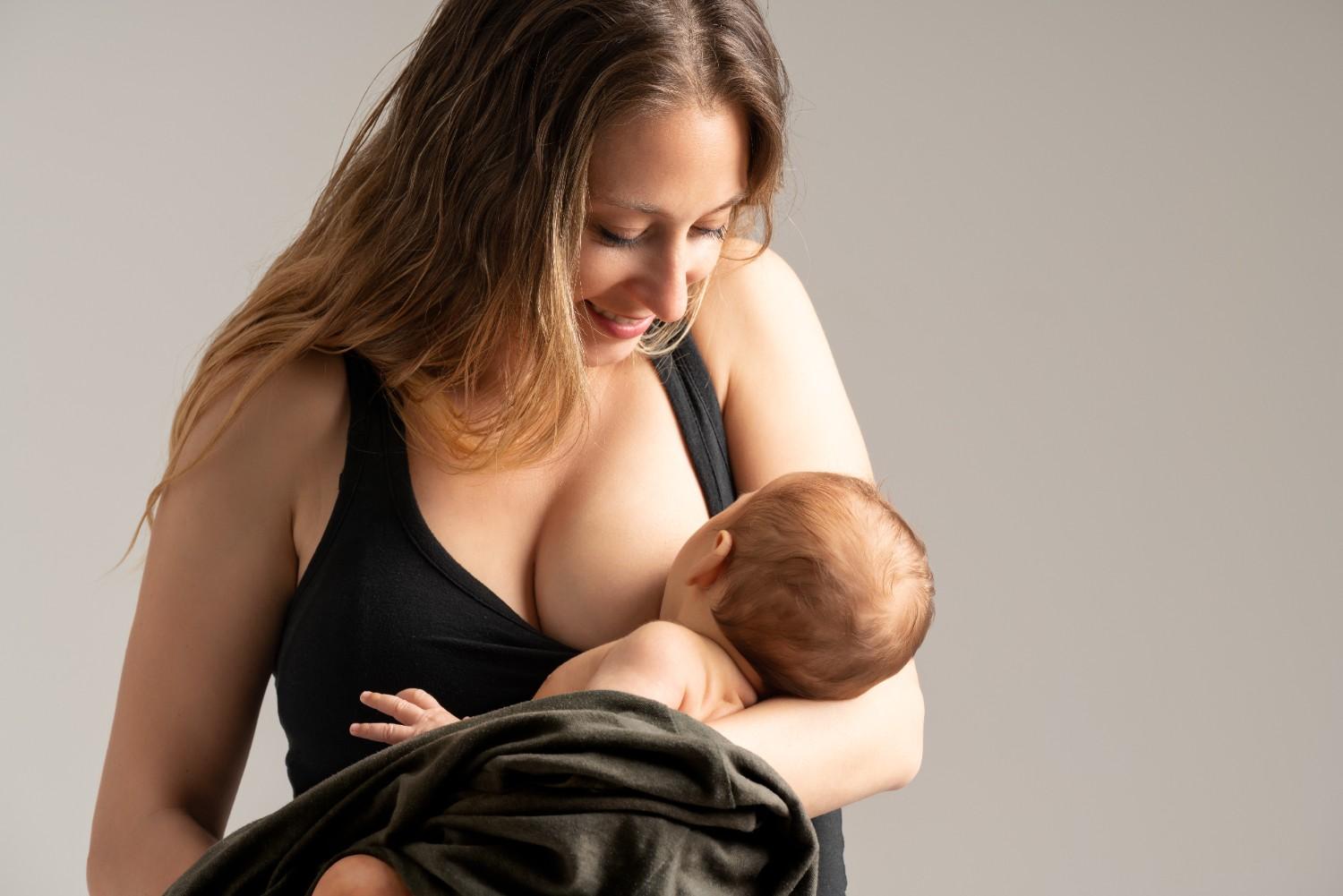
If you’re considering a breast lift and want to breastfeed in the future, it’s important to understand how surgery may affect milk production and feeding. For many women, breastfeeding after a breast lift is still possible, but it depends on the surgical technique and individual factors. In this guide, we explain how a breast lift can impact breastfeeding and what you can do to maximise your chances of success.
Breast Lift Impact on Breastfeeding
A breast lift alters breast anatomy, which can affect breastfeeding function. The impact depends on specific surgical changes to nerves, ducts, and glandular tissue.
Loss of Function
The procedure physically changes the structures responsible for making and transporting milk. Surgery can disrupt some of the milk ducts, the pathways that carry milk to the nipple. While a skilled surgeon using a pedicle technique preserves the central duct network, peripheral ducts in the removed skin are lost.
Additionally, some milk-producing glandular tissue is often reduced. This can lower your overall milk-making capacity, making it harder to produce a full supply, though the remaining tissue frequently compensates with proper, frequent stimulation.
Loss of Sensation
The nerves in the nipple and areola signal your brain to release milk. Surgery can stretch or affect these nerves, leading to reduced sensation. If this signal is weakened, your “let-down” reflex, the process that pushes milk from the glands into the ducts, may be less efficient or slower to activate. This means milk may not eject as readily, even if it is being produced.
Combining a Breast Lift with Implants
Adding an implant does not block ducts or glands, but it changes the surgical approach. The implant’s placement is key. A submuscular placement (under the chest muscle) involves less disturbance to the breast tissue itself. A subglandular placement (behind the breast tissue but over the muscle) on the other hand positions the implant closer to the functional ducts and glands.
The combination of implants with a breast lift is a more extensive surgery, leading to greater initial swelling and more manipulation of tissue. This can prolong the recovery of nerve function and may require more proactive management to establish breastfeeding successfully.
Learn more about breast lift vs breast augmentation and when are they combined.
Key Factors That Affect Breastfeeding Success
The impact of breast lift surgery on breastfeeding depends on several key factors
Nipple Sensation: If your nipples retain good sensation after healing, it’s a positive sign the nerve pathways are intact.
Milk Duct Preservation: This is the most important factor. The specifics of how your breast lift is performed, and whether the nipple stays connected to its blood and nerve supply, will largely determine the impact on the milk ducts.
The Amount of Tissue Removed: A very significant reduction may remove more glandular tissue than a mild lift focused mostly on skin.
Nipple and areola surgery: Incisions that run directly around the areola, or any method that completely detaches the nipple–areola complex from the breast tissue, carry a higher risk of affecting milk production.
Your Baseline Milk-Making Capacity: Your natural ability to produce milk before surgery has a big impact on breastfeeding afterwards. Women who already had low supply, hormonal issues, or limited breast development may still struggle, even if the surgical technique is breastfeeding friendly.
Time since surgery: If your breast lift was done many years ago, some ducts that were cut may have reconnected or formed new channels, which can improve the chance of successful breastfeeding.
Recovery: How you recover after surgery also plays an important role in how well breastfeeding works long term, as nerves and ducts continue to heal. Following a structured recovery plan gives your body the best chance to restore function before a future pregnancy.
Which Surgical Technique is Safest for Breastfeeding?
The choice of breast lift technique is the single biggest factor in preserving breastfeeding function. The periareolar (donut) lift is generally considered the most breastfeeding-friendly technique. The incision runs around the edge of the areola, and in most cases the nipple–areola complex stays attached to the underlying breast tissue on a pedicle. This helps preserve milk ducts, blood supply, and nerves, which all play a role in milk production and let-down.
Because the nipple is not completely removed and reattached, the periareolar lift usually involves less disruption of glandular tissue and milk pathways than more extensive techniques, and it typically results in a ring of surgical scars that blend well with the areola border. That’s why, when suitable, it is often seen as the safest option for women who want to maximise their chances of breastfeeding after surgery.
The crescent lift is even less invasive and carries less risks and complications, with a small incision along the upper edge of the areola only. It can be very gentle on ducts and nerves, but it offers only a very minor lift and is suitable for a limited group of patients with minimal sagging. In other words, it is the least invasive option, but it does not provide enough lifting for most women.
How Soon After Breast Lift Surgery Can You Start Breastfeeding?
Your body needs time to heal completely before the demands of pregnancy and breastfeeding. We strongly advise waiting at least 12 to 18 months after your surgery before trying to conceive.
Why so long? Those first months are when your scars strengthen, swelling fully resolves, and your new breast shape settles. A pregnancy too soon can stretch healing tissues unpredictably and put undue stress on your new contours. Giving your body this full healing window is one of the most important things you can do for both your surgical results and future breastfeeding.
9 Tips for Breastfeeding After a Breast Lift
If you’ve had a lift and are now preparing to breastfeed, these proactive steps can make a real difference:
Start early and feed often
Put your baby to the breast as soon as you can after birth and continue to nurse regularly, around every 2–3 hours. Frequent feeding gives your body strong signals to build and maintain supply.
Use plenty of skin-to-skin contact
Keep your baby close against your bare chest as much as possible. Skin-to-skin helps with bonding, supports the let-down reflex, and can make feeds more effective.
Try breast compressions and hand expression
Gently massaging the breast and hand-expressing colostrum before and after feeds can help milk flow more easily and support supply, especially when your breasts feel full or heavy.
Choose positions that work for you
Experiment with different breastfeeding positions (such as the football hold or side-lying) until you find ones that feel comfortable for your chest and easy for your baby to latch.
Track your baby’s intake
Keep an eye on weight checks, wet nappies, and dirty nappies so you know your baby is getting enough milk. This is especially important after any breast surgery.
Use a pump to boost supply
Pumping for 15–20 minutes after feeds can give your body extra stimulation to produce more milk. This is often helpful in the early weeks.
Supplement when needed
If supply is low, you can top up with expressed breast milk or formula. A supplemental nursing system lets your baby get extra milk while still nursing at the breast.
Get help from a lactation specialist
Arrange an appointment with an IBCLC or lactation consultant to check latch, positioning, and supply, and to get tailored strategies for your situation.
Discuss galactagogues with your doctor
Some prescribed or herbal galactagogues may support milk production, but always talk to your healthcare provider before using anything to increase supply.
Is a Breast Lift Worth It Before Pregnancy?
This is the million-dollar question, and only you can answer it. Here’s how to frame the decision:
Consider having the Lift before if: Your current breast shape causes you significant physical or emotional discomfort, and you are willing to accept that future breastfeeding might be more challenging or that you may need to supplement. The benefits to your confidence and well-being now may outweigh the potential future trade-offs.
Consider Waiting until after if: Breastfeeding is a non-negotiable, primary goal for you and you want to remove any surgical factor that could affect it. You can address sagging once your family is complete by having your breast lift surgery after pregnancy, often combining a lift with augmentation to restore volume lost after pregnancy. Until then, focusing on posture and chest strengthening exercises can help support your breasts and minimise the appearance of sagging as much as possible before surgery.
Frequently Asked Questions (FAQs)
They can, but they don’t always. Many women breastfeed successfully after a lift. The impact depends on the surgical technique, the degree of tissue removed, and your individual physiology. The possibility of a reduced supply is the main consideration.
You should wait until you have fully recovered and are no longer taking any medication, typically 6-8 weeks post-op, before nursing from that breast. However, the key timeline is the 12-18 month wait before getting pregnant to allow your body to heal completely.
The principles are the same for any parent: frequent, effective milk removal. Nurse or pump at least 8-12 times per 24 hours, ensure a deep latch, use breast compression while feeding, and consider power pumping sessions. Working with an IBCLC is crucial for a personalized plan.
Yes, you can. Mastitis is an inflammation or infection of breast tissue, often from a blocked duct. While surgery doesn’t make you immune, ensuring thorough milk drainage through feeding, pumping, and massage is your best defense.
No, milk ducts that are severed do not regenerate. However, the remaining glandular tissue can often hypertrophy (enlarge) and increase its milk-producing efficiency to compensate, which is why many women can still produce a significant, if not full, supply.
Yes, pregnancy will change your breast lift results. The hormonal shifts and physical stretching during pregnancy and breastfeeding can cause renewed sagging and volume loss
Conclusion
Choosing a breast lift when you hope to breastfeed one day requires careful thought and a partnership with a skilled surgeon. While the surgery introduces variables that can make breastfeeding more challenging, it rarely makes it impossible. With the right technique, proper timing, and realistic expectations, many women go on to breastfeed after their surgery.
If you’re weighing these decisions, the most important step is to have a detailed conversation with a specialist who can assess your anatomy and align a surgical plan for you.