
Over time, factors like pregnancy, weight loss, and genetics can cause breasts to sag and lose their youthful shape. A breast lift, or mastopexy, is a transformative procedure designed to raise and firm the breasts by removing excess skin and tightening the surrounding tissue. However, each woman has unique anatomy and aesthetic goals, and the best results come from choosing the breast lift technique that is precisely tailored to her body.
In this guide, we’ll walk you through the different types of breast lifts and help you get one step closer to achieving the results you’re looking for.
What Are the Different Types of Breast Lift?
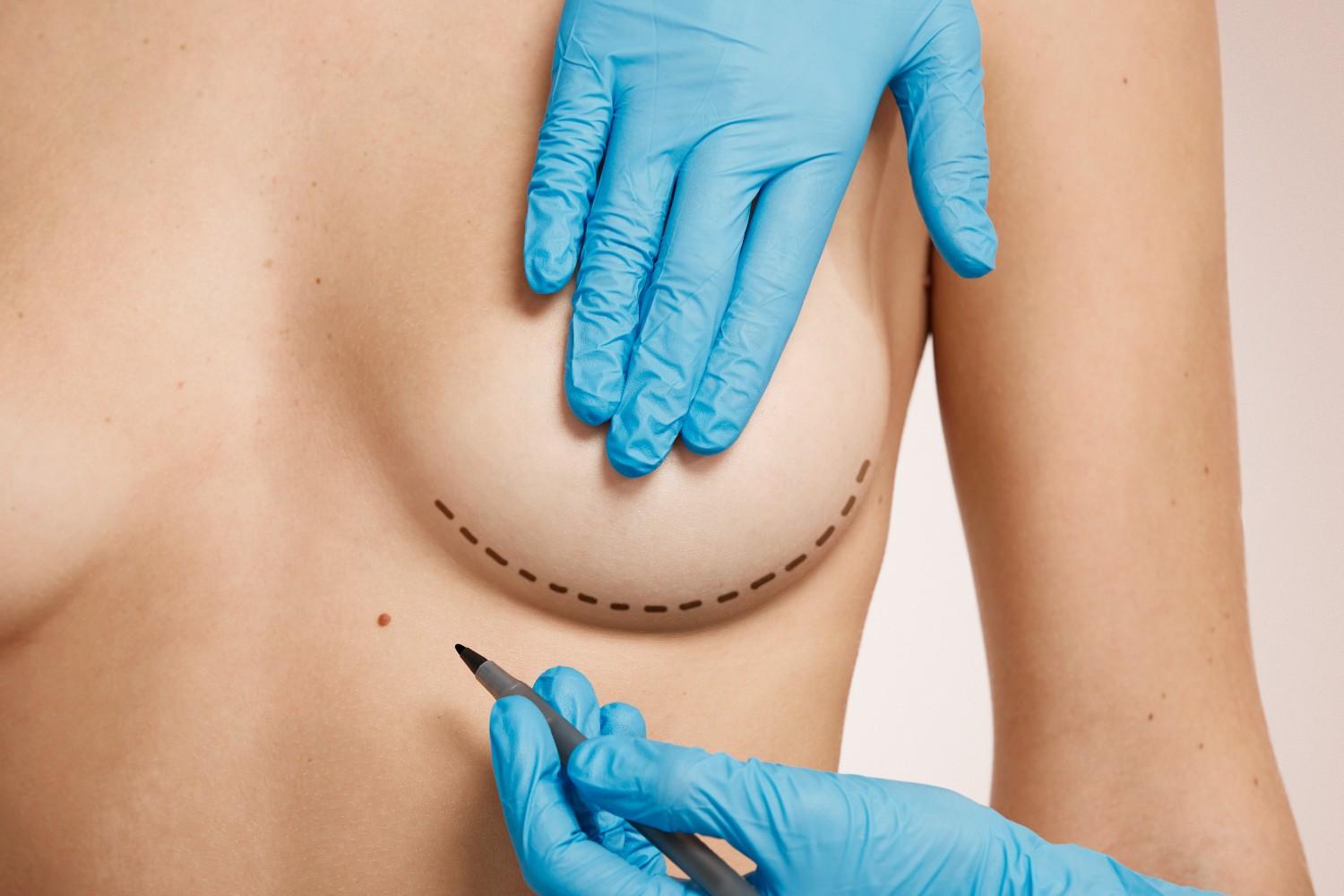
Breast lift surgery can be performed using several different incision patterns, each designed to address a specific degree of sagging and breast shape. Below are the main types of breast lift and how they work:
Anchor Lift
The Anchor Lift, also called Inverted-T, is the most comprehensive procedure, designed for women with significant sagging. It involves three incisions: one around the areola, a vertical line down to the breast crease, and a third along the natural inframammary fold, forming an anchor-like shape.
This extensive access allows the surgeon to remove substantial excess skin, reshape the breast tissue, and reposition the nipple-areola complex to a more youthful height. This technique is ideal for those with more pronounced ptosis who require maximum reshaping and lifting power, though it does result in more visible scarring.
Vertical lift
The Vertical Lift, often called the Lollipop Lift, is a popular technique for moderate sagging. It requires only two incisions: one circling the areola and a single vertical line running down to the breast crease, resembling a lollipop.
This approach allows for significant removal of skin and improved breast projection with a scar pattern that is less extensive than the Anchor Lift. It effectively elevates the breast mound and reduces the size of the areola while creating a perkier, more rounded shape. Many surgeons and patients prefer this technique for its balance of dramatic results and a more discreet scarring profile.
Crescent lift
The Crescent Lift is the most minimal of the breast lift techniques, suitable for those with very mild drooping. It involves a single small incision along the upper half of the areola’s border. The surgeon removes a crescent-shaped piece of skin above the areola, which provides a subtle lift of the nipple position.
This technique is often combined with a breast augmentation to add volume and fullness, but it offers very limited correction for skin laxity or significant sagging. The primary advantage is that the scar is cleverly concealed along the pigmented border of the areola.
Periareolar Lift
The Periareolar Lift, or Donut Lift, uses a single circular incision around the entire circumference of the areola. Through this opening, the surgeon can remove a doughnut-shaped area of skin and tighten the surrounding tissue to create a milder lift.
This technique is best for women with minor sagging and small breasts, where the primary concern is raising the nipple position. A potential drawback, known as “scar widening,” can occur if the skin is closed under too much tension, which may lead to a more noticeable scar or flattening of the breast shape over time.
Learn more about how breast lift surgery is performed and the benefits it can offer.
How to Choose the Right Type of Breast Lift?
Choosing the right procedure is a collaborative decision between you and your surgeon, based on several key factors. The degree of your sagging is the primary determinant, more significant drooping requires more extensive techniques like the Vertical or Anchor Lift. Your personal feelings about how your scars would look like are also crucial, as the procedures offer a clear trade-off between the amount of correction achieved and the resulting scar pattern.
The recovery process after surgery and comfort level are also important factors in your decision. Your surgeon will explain the specific risks and potential complications related to your surgery, then they will assess your existing breast volume, skin quality, and the position of your nipples relative to the breast fold to recommend the technique that will deliver the most natural and harmonious result for your body.
Which Breast Lift Technique is Best After Pregnancy?
Pregnancy and breastfeeding often lead to a loss of breast volume and stretched skin, resulting in what many call “deflated” or “empty” breasts. Getting a breast lift after your pregnancy can effectively reverse these changes. Among the different techniques, the Vertical Lift and the Anchor Lift are typically the most effective.
The Vertical Lift is excellent for restoring a round, projected shape with less scarring, while the Anchor Lift is the gold standard for addressing the most severe skin laxity. During your consultation, your surgeon will evaluate the extent of these changes to determine if a lollipop or anchor approach will best restore your pre-pregnancy silhouette.
Can I Combine Breast Lift With Breast Augmentation?
Yes, you can combine breast lift with breast augmentation in a procedure often dubbed as “augmentation-mastopexy.” This powerful combination addresses both sagging skin and lost volume simultaneously, which is a frequent goal for women after pregnancy or significant weight loss.
The implants restore fullness and upper pole projection, while the lift repositions the breast tissue and nipples for a more youthful contour. This is a more complex procedure that requires significant surgical expertise to ensure a beautiful, lasting result, making the choice of a highly experienced surgeon absolutely paramount.
Frequently Asked Questions (FAQs)
There is no single best type of breast lift as the ideal technique depends entirely on your individual anatomy, the degree of sagging, and your personal goals for scarring and shape. A consultation with a specialist is the only way to determine the perfect approach for you.
While the core techniques are well-established, many surgeons now utilize advanced internal support methods, sometimes called an “internal bra,” using surgical mesh or sutures to provide longer-lasting support. Laser-assisted skin tightening is also an emerging technology to enhance results.
The Crescent and Periareolar Lifts leave the least amount of scarring, with the scar confined to the areola’s border. However, they also offer the most limited correction and are only suitable for very mild cases of sagging.
Your natural anatomy directly determines the suitable technique. Smaller breasts with mild sagging may only need a minimal Crescent lift, while larger or more ptotic breasts often require the more comprehensive correction of a Vertical or Anchor lift for a stable, beautiful shape.
Yes, correcting asymmetry is a key benefit. A skilled surgeon can perform different lift techniques on each breast, removing varying amounts of skin and tissue to individually reshape them. This tailored approach creates a significantly more balanced and symmetrical final result.
While a breast lift turns back the clock, it doesn’t stop it. Your results are long-lasting, but natural aging and gravity will cause some gradual softening and settling over the years.
Conclusion
A breast lift can dramatically restore your confidence in the way you look. The key to a successful outcome lies in selecting the surgical technique that aligns perfectly with your body’s needs and your aesthetic vision. This decision is best made with the expert guidance of a certified and experienced surgeon.
If you’re considering a breast lift, book a consultation with our board-certified breast surgeon at Auralia. We’ll review your anatomy, discuss your goals, choose the most suitable technique, and create a personalised plan for you.